Poached Eggs: 16 Min

Table of Contents
Poached eggs are eggs cooked without their shell in gently simmering, vinegared water until the white sets around the yolk. This version is written for one person: 2 eggs, about 1 liter of water and 3 tablespoons of white wine vinegar, ready in 16 minutes in total, 8 of which are simply the time it takes to heat the water.
The method is adapted from the Pochiertes Ei page of the KochWiki community cookbook, completed with the swirl and the pause between eggs described on English Wikibooks (full credits at the end of the article). About 4 minutes of poaching gives a set white and, typically, a soft or runny yolk: that is the point of the dish, but it also means the egg is not fully cooked. Read the food safety section before serving it to children, older adults, pregnant people or anyone with a weakened immune system.
If you prefer your egg cooked in the shell, see our soft-boiled eggs guide . For eggs poached in a sauce rather than in water, try shakshuka, eggs poached in spiced tomato sauce , and for an egg dish that is cooked through, tamagoyaki, the Japanese rolled omelette .
Utensils #
- A wide pot that is not too tall, with room for about 1 liter of water and the eggs
- A ladle or a small saucer to lower each egg onto the surface
- A slotted spoon to lift the eggs out
- Kitchen paper to drain them
- Small kitchen scissors or a small knife to trim the loose strands of white
- A timer for the poaching time
- A plate to serve on
Recipe #
Ingredients #
- 2 chicken eggs, straight from the refrigerator (as fresh as possible)
- about 1 liter of water (a reference volume for a wide pot)
- 3 tablespoons white wine vinegar (per liter of water)
- salt, to taste, to season the drained eggs lightly
Instructions #
Estimated total time: 16 min with the steps performed in sequence, including cooling and serving.
-
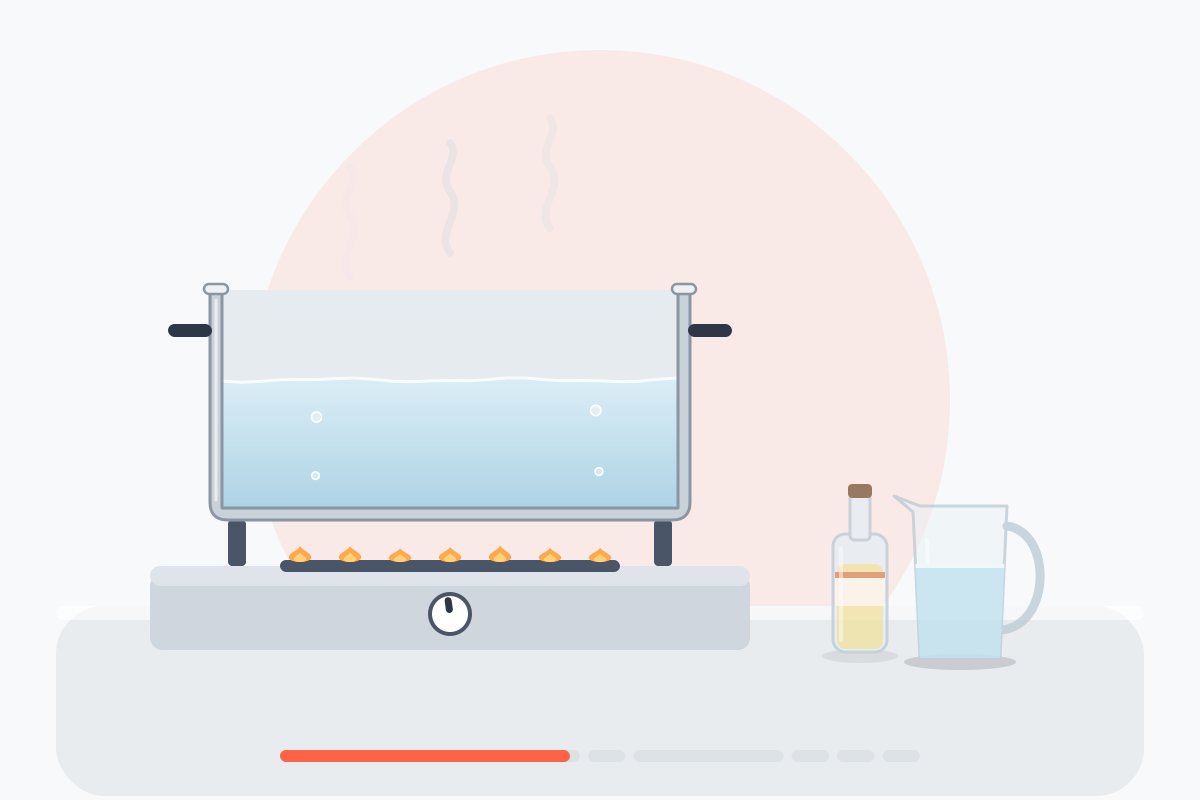
Heat the vinegar water: Pour about 1 liter of water into a wide, not too tall pot, add 3 tablespoons of white wine vinegar and heat until the water boils. The source slides the egg into boiling water, while the British Egg Information Service guide recommends a gentle simmer, one or two bubbles per second, rather than a rolling boil: so lower the heat to that gentle simmer before the eggs go in. Estimated duration: 8 min.
-
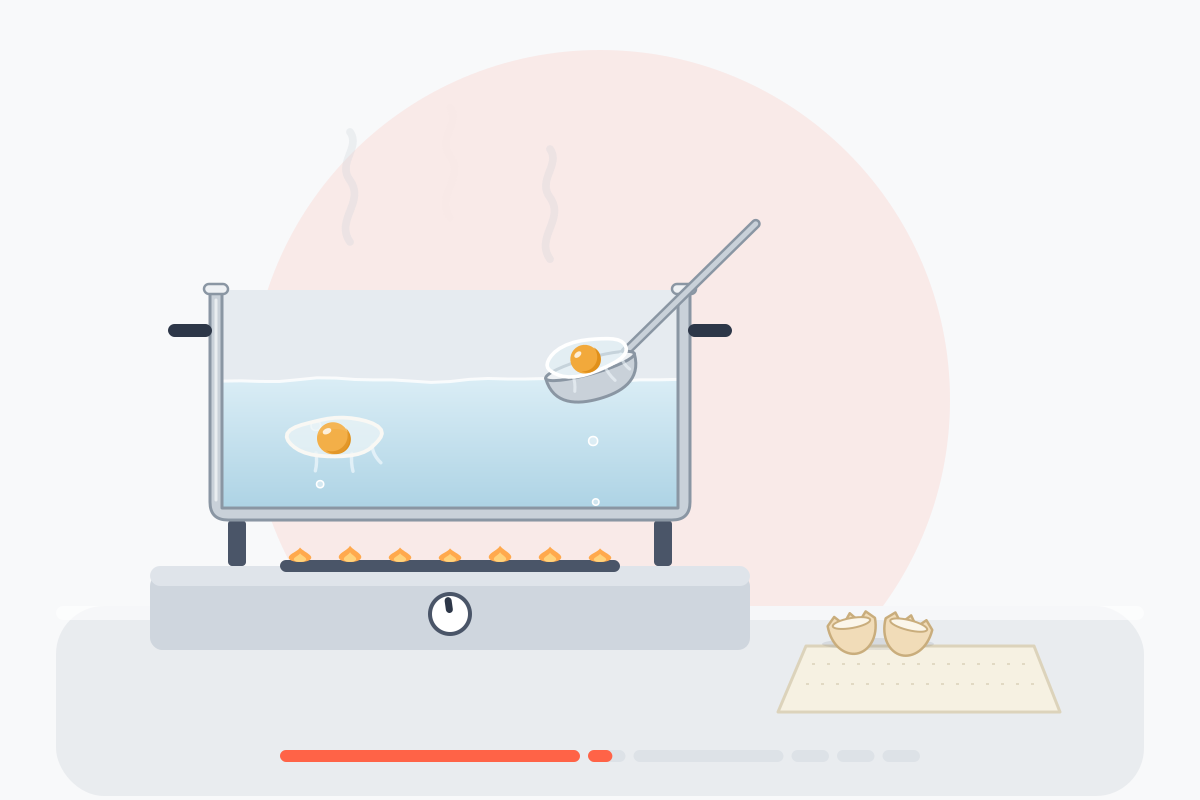
Crack and slide the eggs into the water: Crack one egg and let it slide into the water right at the surface so the yolk does not break; a ladle or a saucer can be used to lower it. If you like, stir the water into a gentle whirlpool first. Wait 10-15 seconds before adding the second egg so the eggs do not stick together. Estimated duration: 1 min.
-
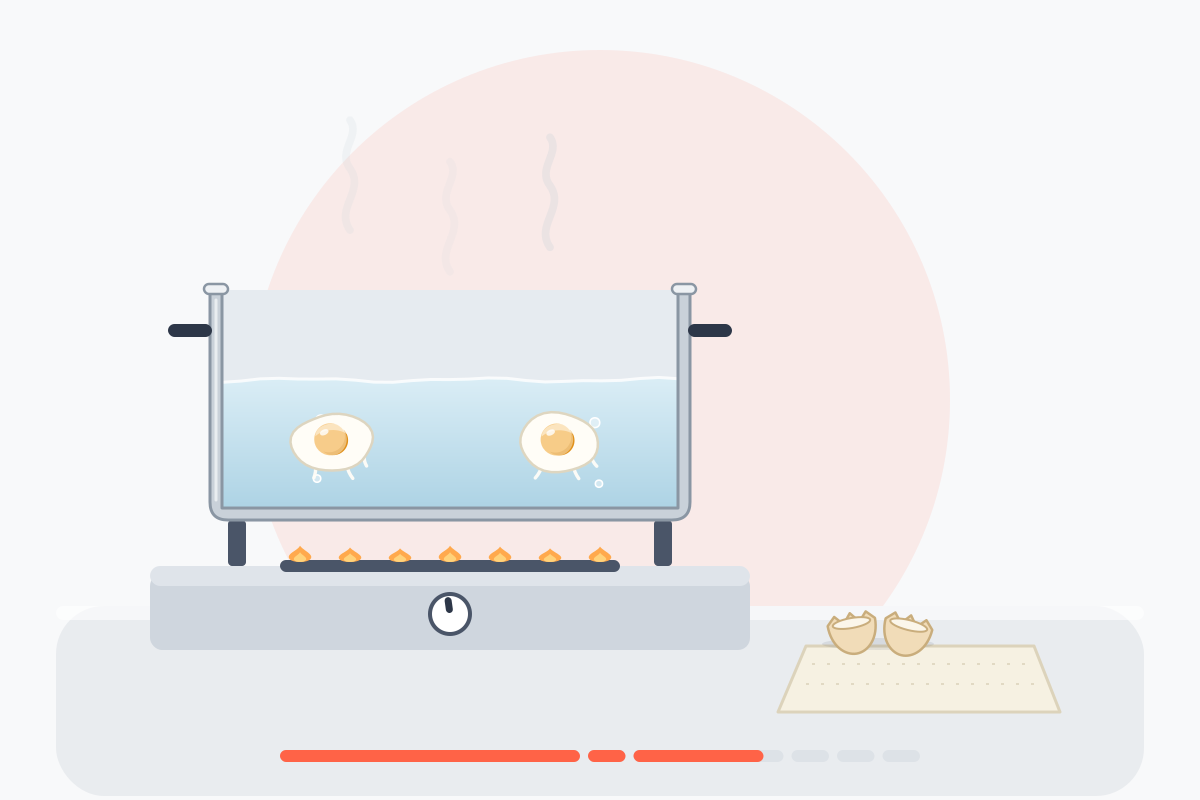
Poach the eggs: Poach the eggs for about 3.5 to 4.5 minutes, timing each egg from the moment it enters the water (4 minutes used here, the midpoint of the source’s range; the other minutes in this recipe are editorial estimates). The source gives no yolk texture: check that the white is set and adjust within the range. With this timing the yolk of a hen egg is typically soft or runny, so the egg is not fully cooked: for children, older adults, pregnant people and people with weakened immune systems, cook until both the yolk and the white are firm. Estimated duration: 4 min.
-
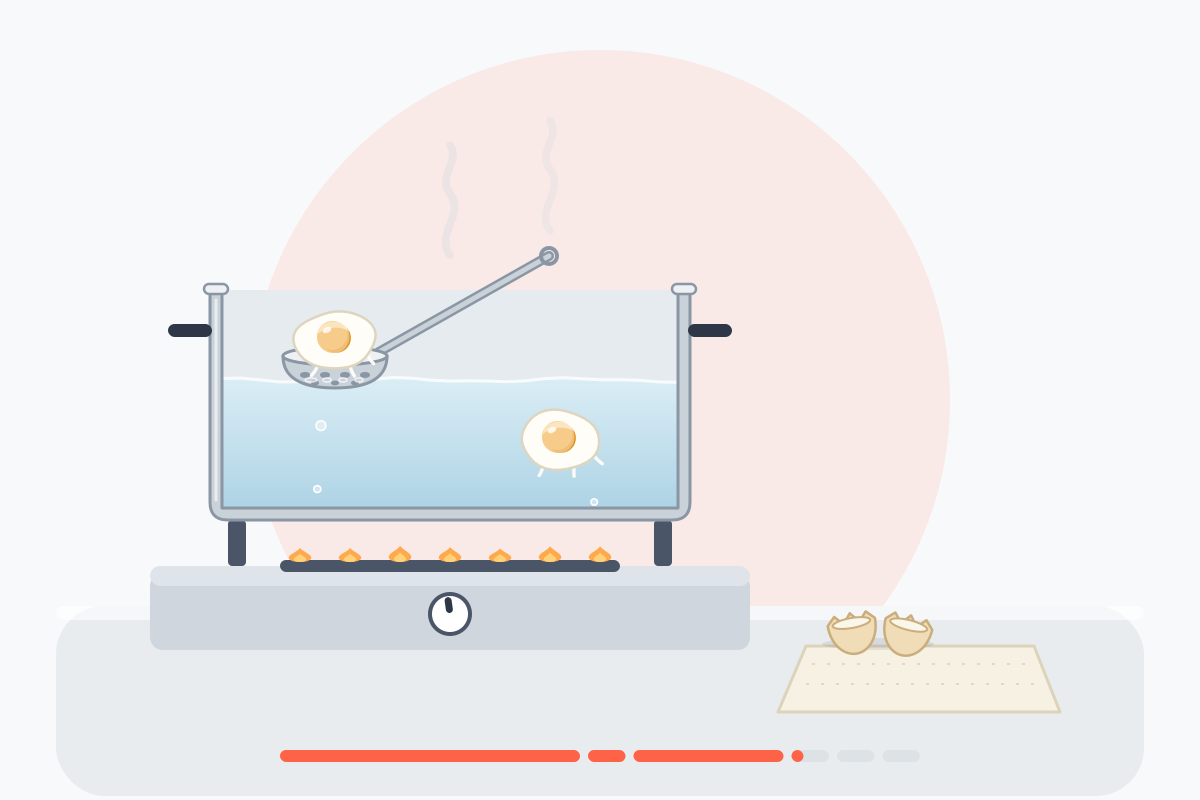
Lift out and drain the eggs: Lift each egg out gently with a slotted spoon and set it on kitchen paper to drain. Estimated duration: 1 min.
-
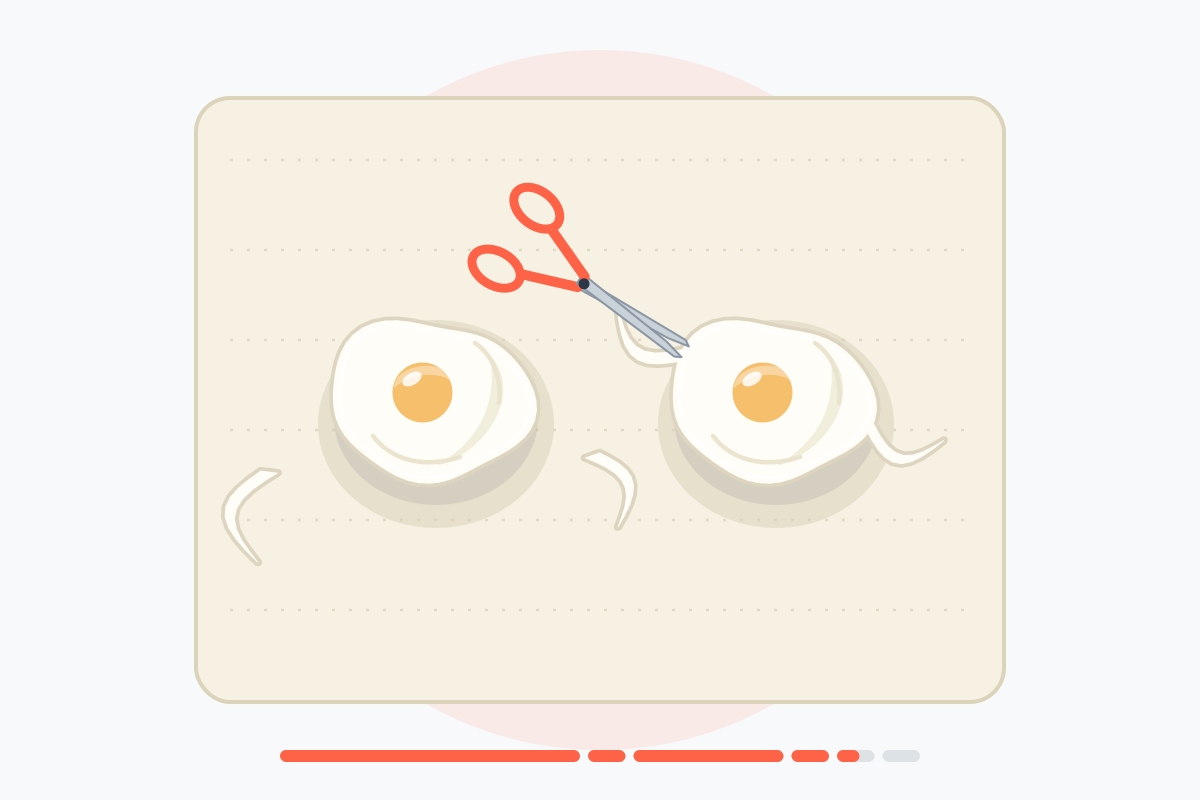
Trim the loose strands of white: Cut away any wispy strands of egg white that hang off the poached eggs, with small kitchen scissors or a knife, for a neat shape. Estimated duration: 1 min.
-
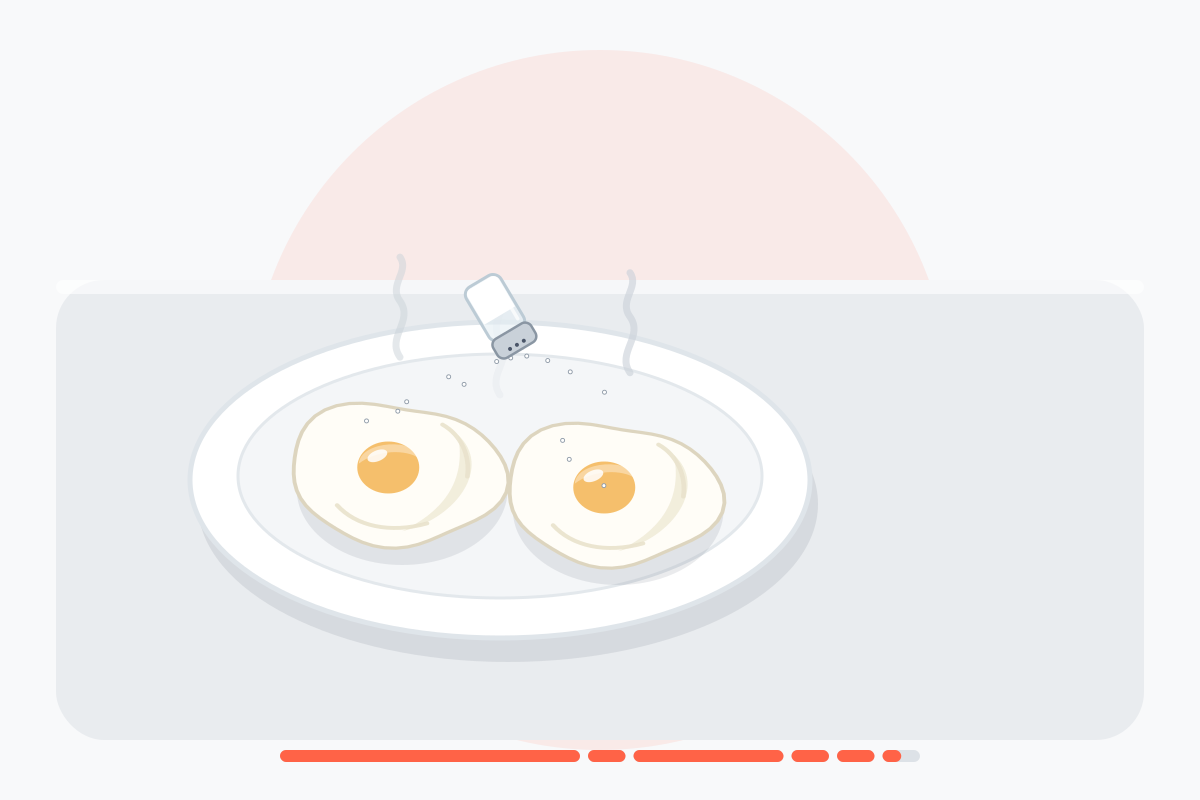
Season lightly and serve: Sprinkle a little salt over the eggs if desired and transfer them to a plate. Serve, for example, with mustard sauce and boiled potatoes, with creamed spinach, in soups or consommés, or on toast (optional suggestions only, not part of the recipe). Estimated duration: 1 min.
Tips for successful poached eggs #
- Use the freshest eggs you can. The fresher the egg, the better the white holds together around the yolk. The eggs go straight from the refrigerator into the water: we dropped the source’s one-hour rest at room temperature on purpose (see the attribution).
- Choose a wide pot that is not too tall, as the source asks.
- Settle the water to a gentle simmer. After the boil, lower the heat until one or two bubbles break the surface per second, as the British Egg Information Service describes, rather than keeping a rolling boil.
- Slide the egg, do not drop it. Bring it right down to the surface and let it slide so the yolk does not break. A gentle whirlpool beforehand is optional.
- Wait 10-15 seconds between eggs so they do not stick together.
- Time each egg, then check the white. 4 minutes is the midpoint of the 3.5 to 4.5 minute range: make sure the white is set and adjust within the range.
- Salt at the end. Salt goes on the drained egg, not into the water: the source seasons the finished egg, and English-language guides advise against salting the water.
- Allergens and alcohol. The dish contains egg. The source’s alternative of 2 tablespoons of dry white wine per liter of water instead of vinegar would add alcohol.
A wide pot, vinegar and a gentle simmer #
Poaching means cooking an egg without its shell in hot water. Use a wide pot that is not too tall, with about 1 liter of water (that volume is only a reference: the source gives its vinegar ratio per liter of water). The egg should enter at the surface: crack it, bring the shell or a ladle right down to the water and let the egg slide off so the yolk does not break.
The source uses 3 tablespoons of white wine vinegar per liter of water. This page has not tested its effect or the flavor it leaves on the egg. The ratio is much stronger than the 1 teaspoon to 1 tablespoon suggested by English-language guides: you may prefer less, though we have not tested a reduced amount either. The source’s alternative is 2 tablespoons of dry white wine per liter, which would add alcohol.
The source slides the egg into boiling water. The British Egg Information Service recommends a gentle simmer, one or two bubbles per second, rather than a rolling boil. This recipe reconciles the two: bring the vinegar water to the boil, then lower the heat to a gentle simmer before the first egg goes in. That is our reconciliation, not a tested change.
Where the 16 minutes go #
Every action sits inside the total: heating the water (8 minutes, an editorial estimate for about 1 liter on a home hob, since the source gives no heating time), cracking and sliding in the two eggs (1 minute), poaching (4 minutes), lifting out and draining (1 minute), trimming the white (1 minute), and seasoning and serving (1 minute). That adds up to 16 minutes.
Only the poaching time comes from the source, which gives a range of about 3.5 to 4.5 minutes; we use the midpoint, 4 minutes, counted for each egg from the moment it enters the water. Because the first egg goes into the water during step 2, its poaching starts before step 3, and the 10-15 second wait between the eggs is included in these minutes. The other durations are our editorial estimates, and nothing here was timed by us. Your hob, your pot and the starting temperature of the water will change the heating step most, so treat the 16 minutes as a plan rather than a guarantee.
Reading doneness, and a fully set version #
The cue that matters is the white. After about 4 minutes it should be opaque, set and gathered around the yolk, which stays a rounded dome under a thin veil of white. The source does not state a yolk texture; with this timing the yolk is typically soft or runny. If the white still looks translucent or loose, keep poaching within the 3.5 to 4.5 minute range and check again.
Some people need the egg cooked through. For a fully set version, cook until both the yolk and the white are firm, which is the wording the FDA uses. We give no number of minutes for this because it has been neither documented nor tested: rely on the result rather than on the clock, and expect that a firm yolk will not be the runny yolk that usually goes with this dish.
Food safety: who should be careful #
About 4 minutes of poaching gives a set white and, typically, a soft or runny yolk, so the egg is not fully cooked and this dish is not safe by default for everyone. The FDA advises cooking eggs until both the yolk and the white are firm, and lists children, older adults, pregnant people and people with weakened immune systems (for example cancer or diabetes) among those at greater risk of severe illness from Salmonella.
For these people, cook until both the yolk and the white are firm. For another egg dish that is fully cooked, you can also try tamagoyaki, the Japanese rolled omelette , where every layer is cooked until no liquid egg remains.
This recipe is written for hen eggs only. The runny-yolk timing does not apply to quail eggs, which follow the site’s separate guidance: they must be fully cooked for everyone (see our complete quail egg guide ).
The UK Food Standards Agency takes a different position for eggs in the UK: it says young children, pregnant people, older adults and people with underlying health conditions can eat raw or lightly cooked hen eggs if they carry the British Lion mark or are Laid in Britain eggs; otherwise egg dishes should be thoroughly cooked or made with pasteurised egg. That rule is specific to UK hen eggs, so do not apply it to eggs of another origin. Severely immunocompromised people should seek medical advice.
Serving ideas #
The source suggests four ways to serve poached eggs, as simple suggestions: with mustard sauce and boiled potatoes, with creamed spinach, in soups or consommés, or on toast. None of these accompaniments is in the ingredient list or counted in the 16 minutes. A little salt on the drained egg is the only seasoning the source asks for, so choose accompaniments that bring their own flavor.
We have no tested guidance on keeping or reheating poached eggs, so we do not recommend making them ahead. This page is written for 2 eggs; for more people you would repeat the sliding in and the pause between eggs, but larger batches have not been tested here.
Common problems #
Wispy strands of white hang off the egg. As in step 5, cut them away with small kitchen scissors or a knife for a neat shape.
The eggs stick together. Wikibooks waits 10-15 seconds before adding the second egg so that they do not stick together.
The yolk breaks. Slide the egg in right at the surface, using a ladle or a saucer if you need help.
The vinegar taste seems too strong. The source’s ratio is strong, and we have not tested the flavor it leaves. A smaller amount is possible but is untested too.
Source and attribution #
This article is an adaptation of the Pochiertes Ei (Verlorenes Ei) page of the KochWiki community cookbook (in German, by KochWiki contributors, page last edited on 6 September 2017), published under the Creative Commons Attribution-ShareAlike 3.0 license (CC BY-SA 3.0) . The optional whirlpool and the 10-15 second pause between eggs come from the English Wikibooks page Cookbook:Poached Egg (by Wikibooks contributors, CC BY-SA 4.0). The visual cue of one or two bubbles per second comes from the British Egg Information Service ; the instruction to boil and then lower to a gentle simmer follows Sainsbury’s Magazine . The text has therefore been changed: translated into English, rewritten and expanded with explanations and editorial advice by HowCookEggs. Changes from the source: the one hour at room temperature before cooking was dropped on purpose (the eggs go from the refrigerator into the water, and the effect of a cold egg on the poaching time has not been tested); the water is brought to a boil and then lowered to a gentle simmer; 1 liter of water is a reference volume we chose; the total time of 16 minutes is the sum of the steps, not the 20 minutes the source states; the durations other than the poaching time are editorial assumptions; the source’s tip about a sealed plastic bag was not used; and a food safety warning was added. The combined adaptation is published under the Creative Commons Attribution-ShareAlike 4.0 license (CC BY-SA 4.0) . We have not cooked or timed this recipe ourselves: it follows the cited sources.
Frequently Asked Questions #
How long does it take to poach an egg? #
The source gives about 3.5 to 4.5 minutes of poaching, and this recipe uses 4 minutes, the midpoint of that range, counted for each egg from the moment it enters the water. The figure of 16 minutes covers the whole recipe: heating the water, sliding in the eggs, poaching, draining, trimming and serving; apart from the poaching range, the durations are editorial estimates. Check the white above all: it should be set, and you can adjust within the range.
Is a poached egg safe for everyone? #
No. About 4 minutes of poaching gives a set white and typically a soft or runny yolk, so the egg is not fully cooked. Children, older adults, pregnant people and people with weakened immune systems are at higher risk of Salmonella illness, according to the FDA . For them, cook until both the yolk and the white are firm. The UK Food Standards Agency rule about British Lion or Laid in Britain eggs is specific to the UK and does not apply to every egg. This recipe is written for hen eggs only: the runny-yolk timing does not apply to quail eggs, which must be fully cooked for everyone (see our complete quail egg guide ). For an egg dish that is cooked through, see also tamagoyaki, the Japanese rolled omelette .
Should the eggs come to room temperature before poaching? #
The source asks you to take the eggs out an hour before cooking. We dropped that step on purpose: the eggs go straight from the refrigerator into the water. The effect of a cold egg on the poaching time has not been tested here, so watch the white and adjust within the 3.5 to 4.5 minute range.
Can I use less vinegar? #
The 3 tablespoons per liter of water are the source’s ratio. English-language guides use much less, from 1 teaspoon to 1 tablespoon. We have not tested how the vinegar tastes on the egg, nor a reduced amount, so adjust to your own taste. The source also offers 2 tablespoons of dry white wine per liter instead of vinegar, which would add alcohol.
What do I do about wispy strands of white around the egg? #
Cut them away, as in step 5, with small kitchen scissors or a knife, for a neat shape. The fresher the egg, the better the white holds together.
Can I make poached eggs ahead of time? #
We have no tested or documented storing or reheating advice for this recipe, so we do not recommend making them ahead. If you would rather cook the egg in its shell, see our soft-boiled eggs guide , and for eggs poached in a sauce at the table, try shakshuka .